Trust-aware AI for Multilingual Care
Auravio uses AI-powered medical interpretation, trust-aware translation, and FHIR-ready clinical workflows to help clinicians and patients communicate across language barriers.

The Problem
Language barriers in care create real clinical risk
01
Unsafe miscommunication
Symptom descriptions, pain details, and timelines can be misunderstood during care.
02
Low trust in generic tools
Most translation apps do not show uncertainty or explain when the output may be risky.
03
Poor discharge understanding
Patients may leave without fully understanding medications, follow-up steps, or warning signs.
Why do current solutions fail?
The tools clinicians use today don’t fit clinical environments.
Generic translation apps optimize for fluent-sounding output. They don’t preserve medication names accurately, they silently drop negation, they hallucinate detail to fill gaps, and they have no way to tell a clinician when their output is wrong. A confident translation that flips “no allergies” into “has allergies” is more dangerous than no translation at all.
Phone and video interpreters are essential, but they are not always available at the moment a patient is describing chest pain in the exam room. Auravio is built for that gap — and built to tell you when the gap needs a qualified human interpreter instead. Auravio is not a replacement for qualified medical interpreters and is not intended for use in consent conversations or other high-risk exchanges without one.
The Solution
A clinical communication system, not just a translation tool
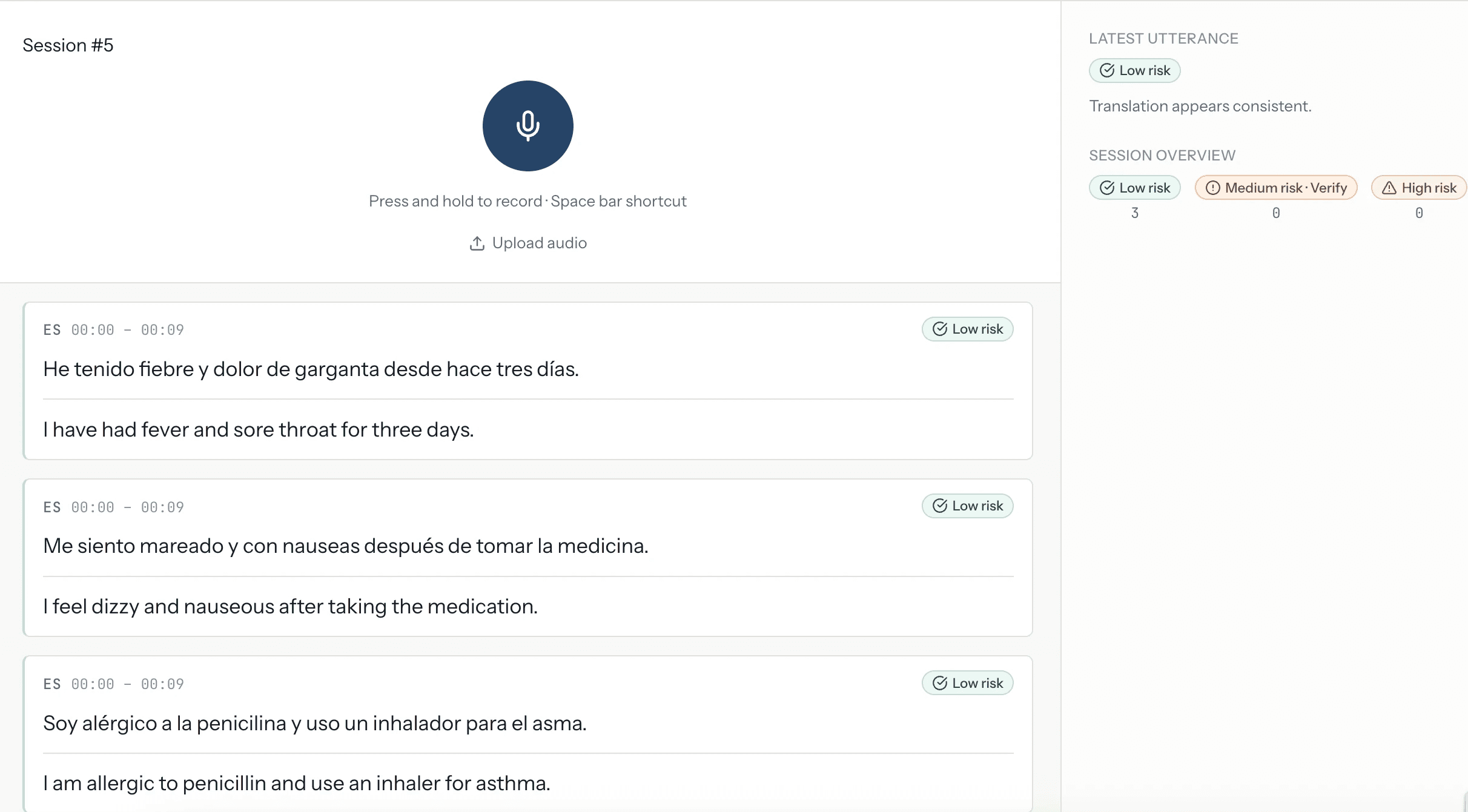
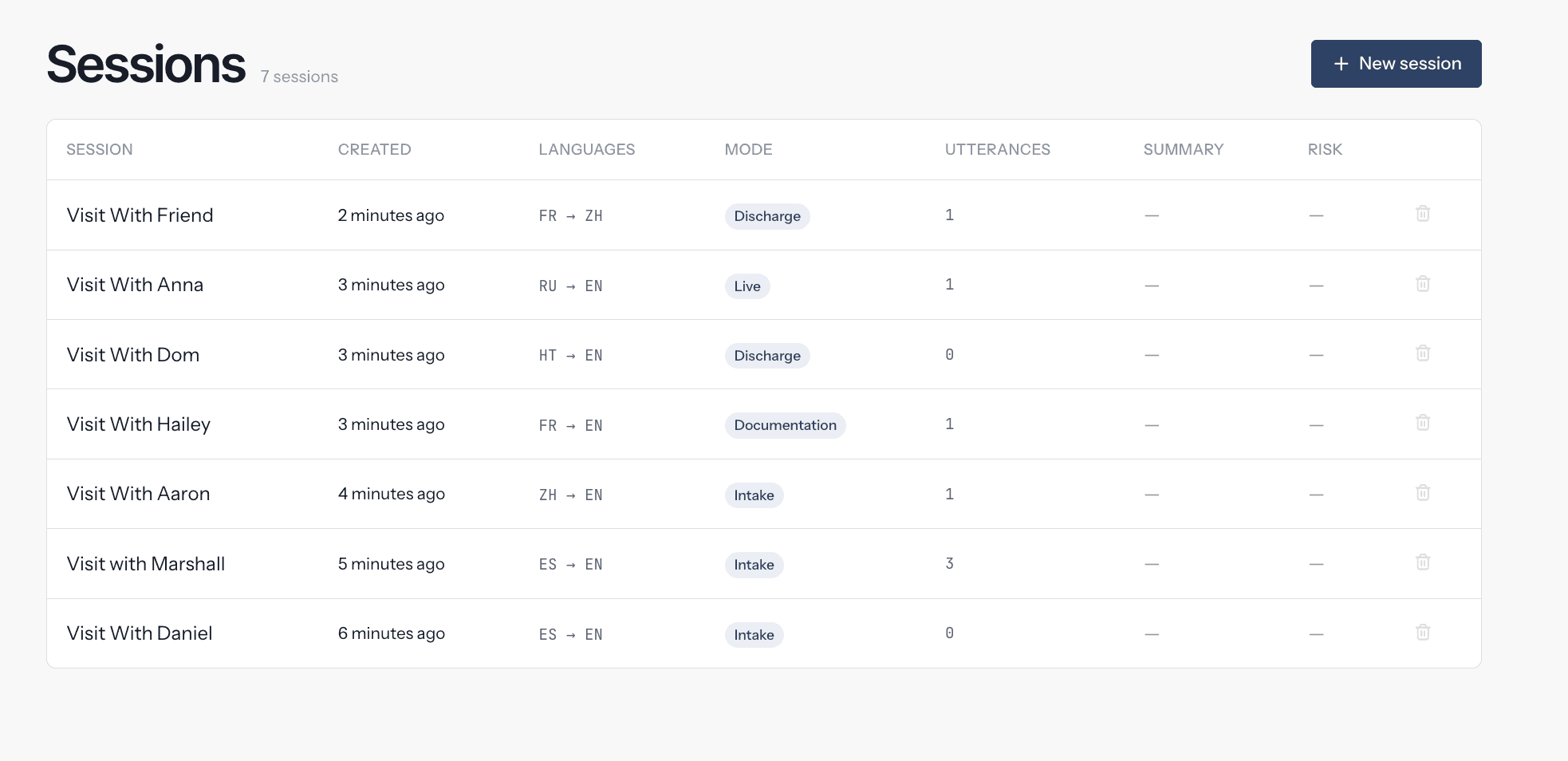
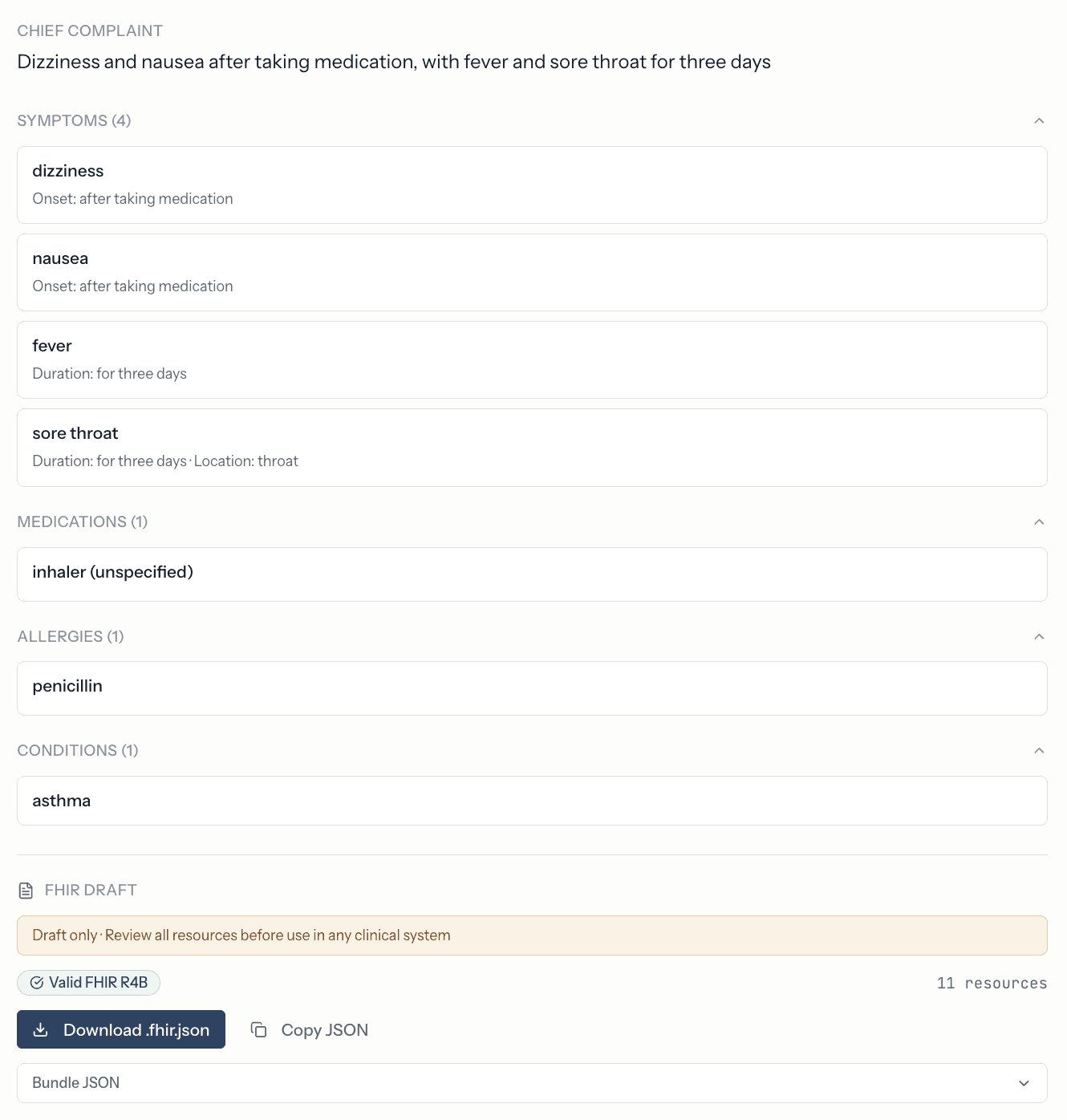
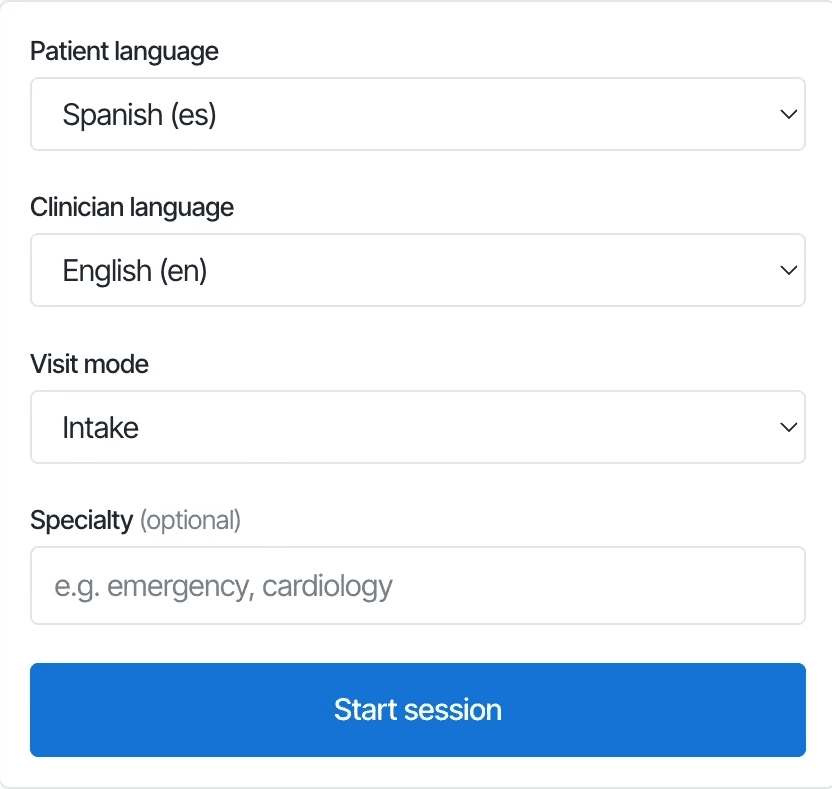
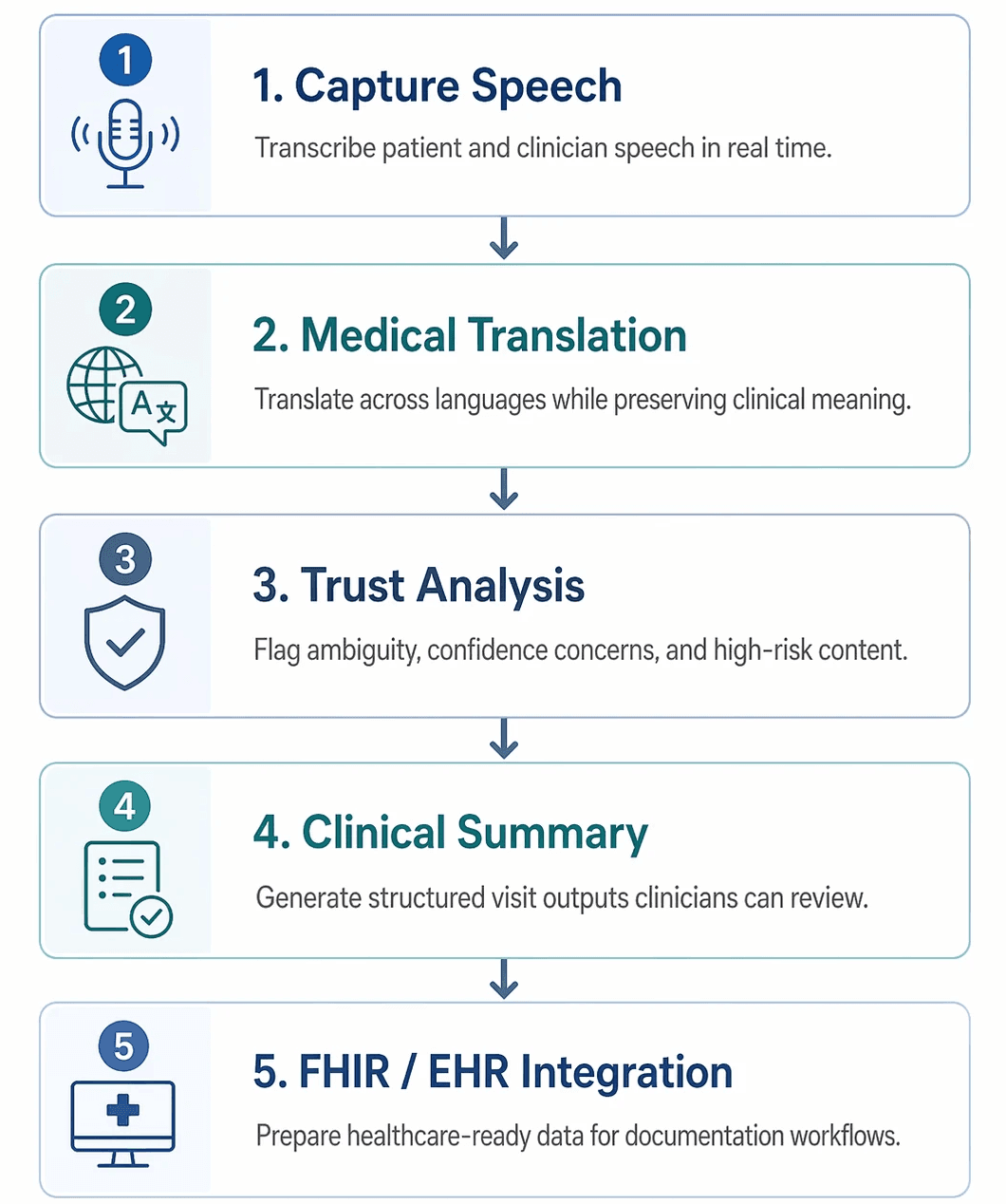
Auravio combines speech recognition, medical translation, trust analysis, and structured outputs so cross-language care is safer, clearer, and easier to document.
Evaluated through blinded physician review
Auravio received 83.5% fewer serious-error ratings than the tested Whisper-1 endpoint in a five-language fictional benchmark.
IN THE NEWS
Auravio in the press
Featured by outlets covering innovation in multilingual care.
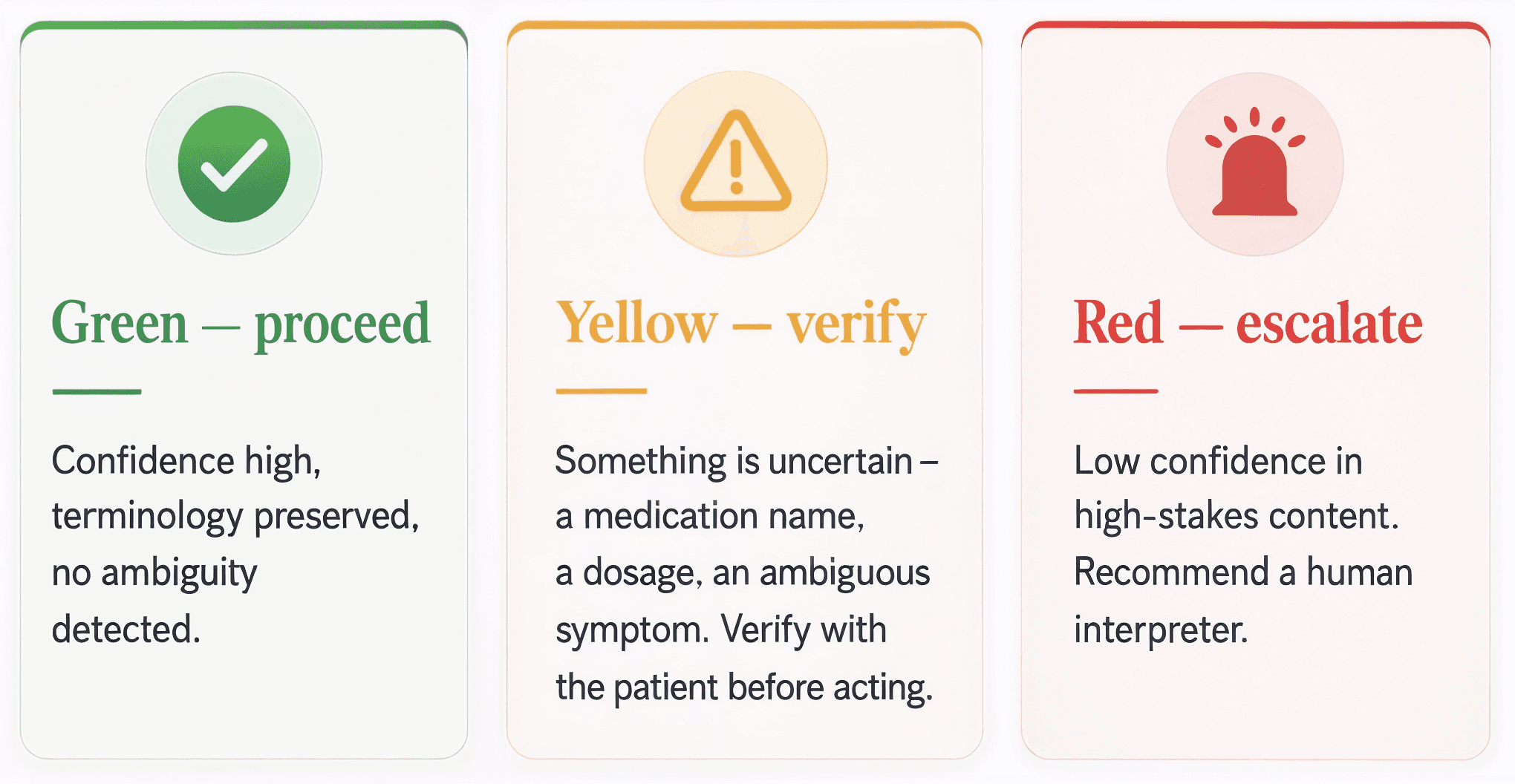
Every translation comes with a confidence signal, a risk band, and a recommendation. The trust layer watches for the failures that matter clinically: medication ambiguity, lost negation, dosage ambiguity, out-of-distribution terminology, semantic drift, and hallucinated detail. When it’s uncertain, it tells you.
Built for multilingual clinical environments.
Auravio is architected for HIPAA-aligned operational practices, so that Business Associate Agreement execution is a contracting step rather than a re-architecture.
Configurable retention
Session-level deletion
OIDC single sign-on
Role-based access
Encryption at rest for all patient-derived data
Append-only audit log for every session event.